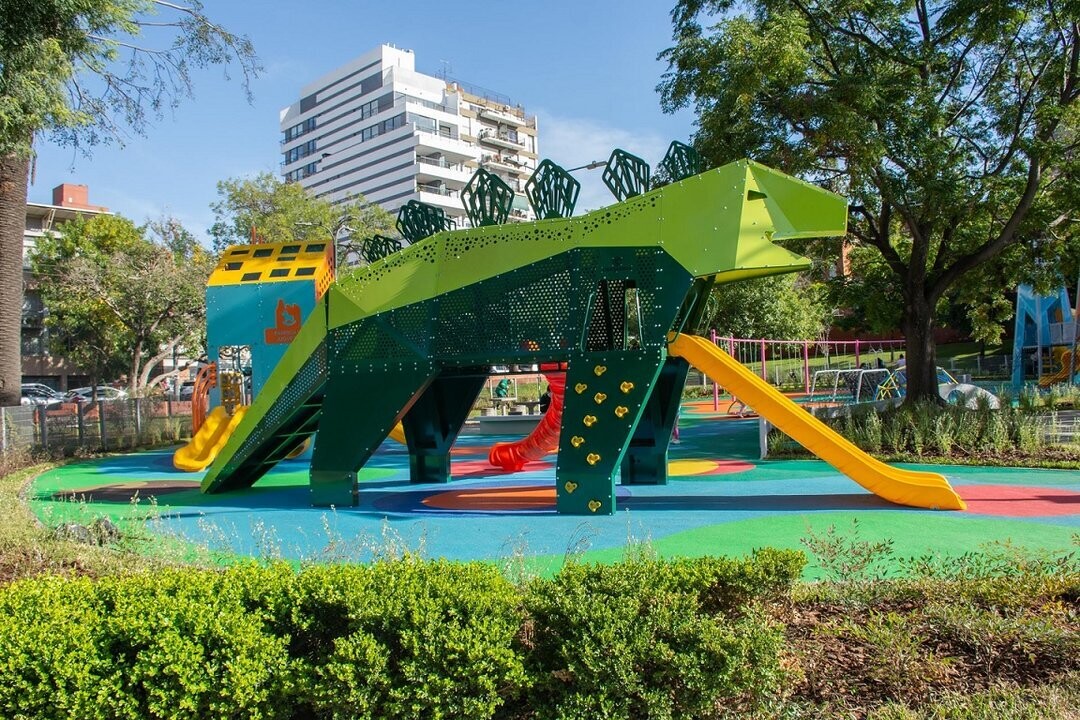
The Legislature of the Autonomous City of Buenos Aires unanimously approved in its last ordinary session a bill that mandates the installation of inclusive play equipment in all children's recreational areas of the capital. The project cites article 30, section 5, of the Convention, which states: “Ensure that children with disabilities have equal access with other children to participation in play, recreational and sporting activities.” The Convention on the Rights of the Child is also mentioned, whose article 31 provides: “States Parties shall respect and promote the right of the child to full participation in cultural and artistic life and shall encourage the provision of appropriate and equal opportunities for cultural, artistic, recreational and leisure activities”. The text argues that the removal of barriers and the creation of ludic meeting spaces make it possible to generate instances based on the social perspective of disability and accessibility, “in contrast to the current situation, where most surfaces, designs and installations are not suitable”. In this way, “the concept of 'adapted games' is abandoned in favor of 'inclusive games', in line with the social model of disability”, which seeks to promote autonomy and independence in all areas of daily life. The initiative is supported by international instruments such as the UN Convention on the Rights of Persons with Disabilities. The project also requires that play structures be accessible in terms of their location, access method, and play proposal, with the aim of fostering common areas where children with and without disabilities can play together. The project's justification emphasizes that inclusion must be understood as the creation of environments designed from the outset to be used by all people. Under the proposal, every square and park with children's play areas must have inclusive equipment, the quantity of which will be determined by specific technical feasibility studies for each location. In this way, the regulation “will no longer be limited to the presence of accessible swings, as has been the case until now, but will require a variety of games that respond to the different needs and preferences of childhood”. The project's article states that “inclusive games must respect the diversity of options present in each park or square, avoiding concentration in a single variety”. The new regulation seeks to amend the current law to transform parks and squares, guaranteeing accessibility, enjoyment and participation for all children, including those with disabilities. The norm promoted by deputy Juan Manuel Valdés (Unión por la Patria) requires a comprehensive review of Law 2219 and redefines the scope of accessibility in green spaces.